
Indoor Football Facility Design: Layout Plans, Dimensions and Build Essentials
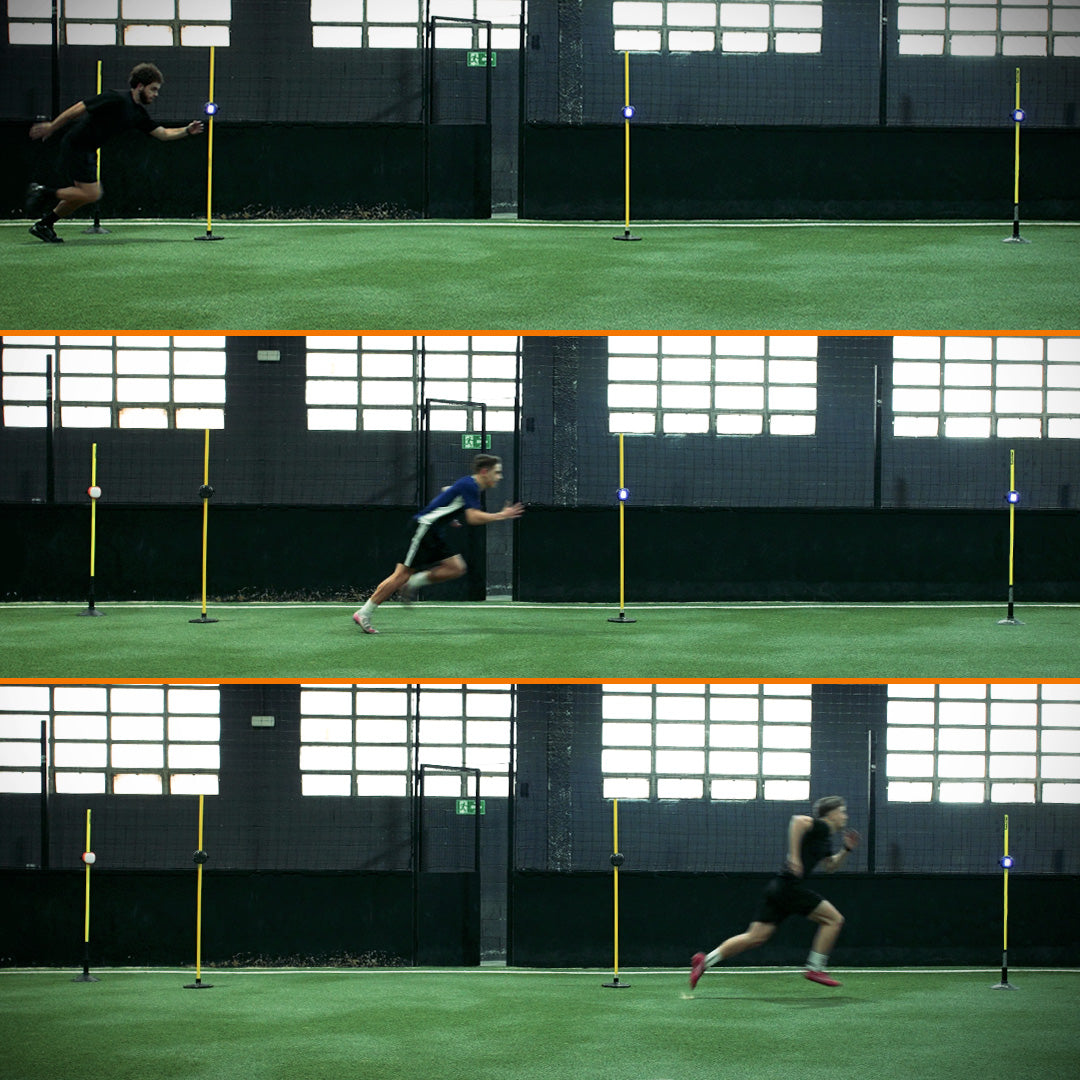
Most indoor facilities go wrong before the design work really begins. The problem usually starts with the footprint.
By David Findlay, CGO at Goal Station.
Quick Answer: Indoor football facility design should start with the format of play, not the building size. Once the format is clear, you can work outward from there to determine field dimensions, ceiling height, surface type, barrier systems, and the space needed for circulation and support areas. Every major design choice depends on that first decision.
Definition: Indoor football facility design is the planning process used to define the layout, dimensions, surfaces, and structural requirements of an enclosed football venue. It includes the playing area, markings, ceiling clearance, lighting, barriers, netting, access routes, and support spaces needed to create a facility that is safe, workable, and commercially viable, in line with established indoor football field dimension standards.
Key point: One of the most expensive mistakes in indoor football facility design is choosing the building footprint before deciding what format the venue is actually meant to support. Once the format is wrong, every specification downstream becomes harder to fix.

Why Design Starts With Format, Not Building Size
The first real decision is not how big the building should be. It is what kind of football the facility needs to host.
A venue designed for futsal has very different requirements from one built for small-sided turf football or full indoor football. Surface type changes. Ceiling requirements change. Run-off zones change. So do player flow, line markings, and the way the space is used operationally.
There are three formats that shape most briefs:
- Futsal: Usually played on a hard court with a low-bounce ball. Recreational courts generally range from 25 to 38 metres in length and 16 to 20 metres in width. International-standard courts are larger, typically 38 to 42 metres by 20 to 25 metres.
- Small-sided indoor football: Usually 5v5 or 7v7 on artificial turf, often enclosed by boards or netting. Field sizes commonly fall between 35 and 45 metres in length, depending on the number of players and the operator’s preferred setup.
- Full indoor football: More common in North America, this format is generally played on artificial turf in an arena-style setting. Standard field lengths are often around 52 to 61 metres, with widths of roughly 24 to 27 metres.
Each of these formats brings its own structural and operational requirements. That is why early planning needs to line up with the dimensional and structural guidance used in indoor football facility construction guides.

Structural Planning and Clearance Requirements
Once the format is locked in, the building envelope has to do more than fit the field itself. It also has to allow for run-off space, barriers, circulation, and any containment systems around the playing area.
This is where many projects get caught out. Designers often measure the field correctly, but underestimate the total footprint because they leave out run-off zones or the depth of the barrier systems.
For recreational use, indoor football facilities usually need a minimum internal ceiling clearance of around 5.5 to 6 metres above the playing surface. Competition futsal and full indoor football generally need more headroom, often in the 7 to 9 metre range, to allow for safer play, better ball flight, and overhead netting where required.
For new-build projects, pre-engineered steel buildings are often the preferred structural option. Clear-span steel frames remove internal columns, which makes it much easier to create uninterrupted playing areas across wider spans, as outlined in steel building design references for indoor football. They can also reduce construction time and simplify long-term maintenance compared with more traditional structures.
Run-off zones should be included in the footprint from the beginning. In many recreational layouts, that means allowing at least 1 metre beyond each short end of the field and around 0.5 to 1 metre along the sides. Competition environments often need more.
Surface Selection in Football Training Facility Design
Surface choice affects much more than how the field looks. It changes the build-up below the surface, the playing characteristics, and in some cases the type of users the venue can realistically attract.
- Artificial turf (3G or 4G): This is the most common choice for multi-use indoor football and training venues. It generally requires a compacted sub-base, a shock pad, and an infill system such as rubber or sand.
- Futsal court surface: Competition futsal normally requires a hard court. Polyurethane and vinyl systems are common because they offer durability and lower long-term maintenance compared with some older systems.
- Hybrid grass: This tends to appear only in elite indoor training halls where operators want something closer to outdoor conditions. It is expensive to install and maintain, which limits its commercial appeal.
Surface selection also affects the lighting plan. Artificial turf under LED systems generally needs at least 200 lux for training and around 500 lux or more for higher-level play, consistent with sports facility safety and lighting requirements.
Designing the Space Beyond the Field
A workable indoor football facility is never just a field inside a building. The surrounding spaces are part of the operating model, and when they are undersized, problems show up almost immediately.
- Player areas: Bench space, substitution routes, and entry points need to be planned from the start.
- Spectator zones: Viewing areas affect both building width and safety separation.
- Storage: Dedicated space for goals, balls, and training equipment helps reduce clutter and avoid operational friction.
- Reception and changing: These areas can easily add 20 to 30 per cent to the required footprint.
- Plant space: HVAC, electrics, and other building systems need proper room and should not be treated as an afterthought.
Barrier and Netting Systems
Barrier and netting systems shape how the facility functions day to day. They influence safety, ball containment, session flow, and the overall user experience.
- Perimeter boarding: Common in small-sided formats and usually around 1 to 1.2 metres high.
- Overhead netting: Used to stop balls from interfering with lights, roof structures, or neighbouring areas.
These systems should meet the relevant impact and safety expectations set out in indoor facility safety guidelines.
Lighting Specification
Lighting is not just a finishing detail. It affects visibility, safety, coaching quality, and whether the facility works properly during peak evening hours.
- Training: 200 to 300 lux
- Competition: 300 to 500 lux
- Broadcast use: 500 to 1,500 lux
LED systems are now standard in most new facilities because they provide better efficiency, more even coverage, and more consistent performance across large indoor surfaces.

Goal Station: Designing for Training Output, Not Just Fit-Out
Most indoor football facility design stops once the layout works on paper. The field fits, the clearances are compliant, and the support spaces are in place. But that still leaves a much bigger question unanswered: what will training actually look like inside the building once it opens?
This is where many facilities leave both performance and commercial value on the table.
Goal Station approaches facility design as the creation of a training environment, not simply a playable space. That changes the brief. The layout is not only there to meet dimensional requirements. It is also there to support repetition, improve coaching flow, and allow players to perform technical and decision-based actions continuously.
That has practical implications during planning.
Circulation space affects how quickly sessions reset and how efficiently players rotate. Barrier systems affect ball return and continuity. Ceiling height and mounting locations can determine whether integrated training systems work smoothly or become a constant source of interruption.
When those elements are not aligned, the problems show up early. Sessions lose rhythm, coaches spend more time managing the setup than delivering training, and player engagement suffers. The facility may still meet the basic standard, but it is not working as well as it should.
Goal Station environments are built to reduce that friction. The aim is to support technical, cognitive, and physical work in a setting that allows repetition and flow to happen without constant interruption.
For operators and designers, the takeaway is straightforward. A facility layout should not be approved purely because the dimensions work. It should also be tested against how the space will actually be used to deliver training at volume.
A facility designed this way is more likely to produce consistent training output and stronger long-term commercial performance. Operators who want to explore that approach can contact Goal Station to see how it could fit into their design process.
Frequently Asked Questions
What is the standard size for an indoor football facility?
There is no single standard size. It depends on the format, with futsal courts at the smaller end and full indoor football fields requiring much larger footprints.
What ceiling height is needed?
For recreational use, around 5.5 to 6 metres is often the minimum. Competition environments usually need more, often in the 7 to 9 metre range.
What surface is most common?
Artificial turf is the most common choice for indoor football and training facilities. Futsal venues usually require a hard court instead.
What planning issues usually apply?
Requirements vary by location, but common issues include change of use, building regulations, noise, access, and parking.
How many pitches can fit inside one facility?
That depends on the footprint, the format, and whether the structure is clear-span. Larger unobstructed buildings make multi-pitch layouts much easier to achieve.