
How to Start a Football Academy: 10 Decisions That Determine Whether You Scale or Stall
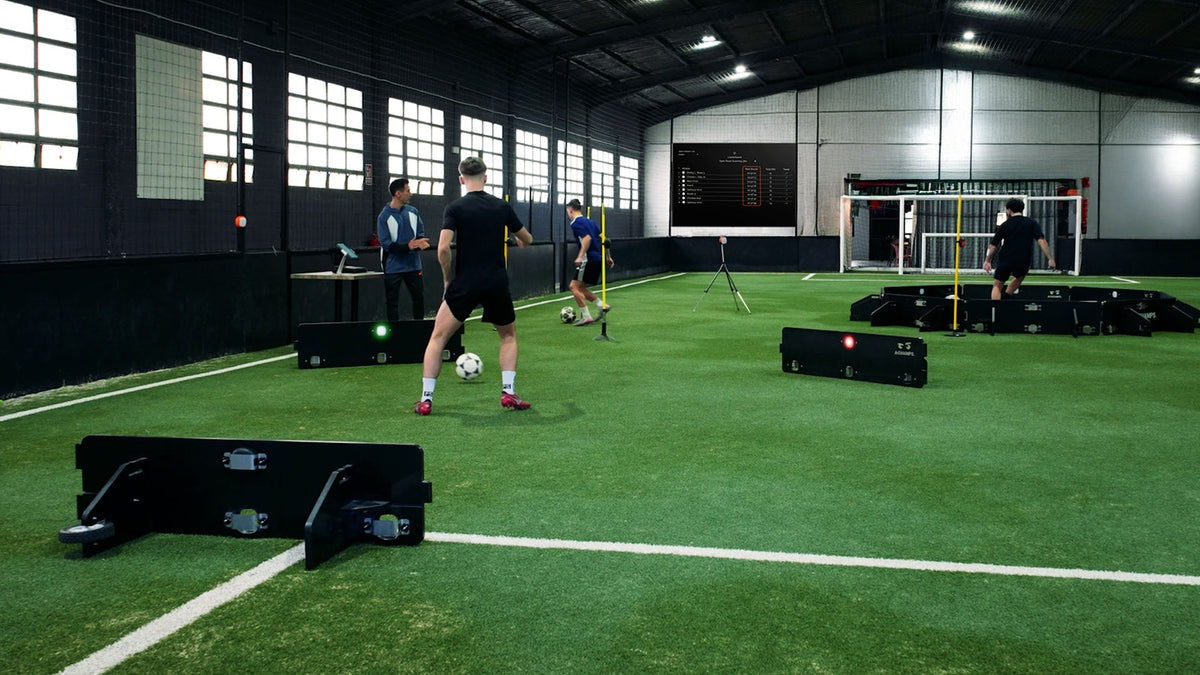
Most people researching how to start a football academy focus on the visible pieces first. They think about branding, kit design, session plans, social media, and finding pitch space. Those things matter, but they are not usually what decides whether an academy survives. What tends to break a programme in year one or two is weaker infrastructure underneath it: poor pricing, no clear delivery model, coach turnover, inconsistent session quality, and no reliable way to track player progress.
By David Findlay, CGO at Goal Station.
Quick Answer: Starting a football academy requires a registered business entity, the right insurance, secure facility access, qualified coaches, a clear curriculum, a player registration process, and a pricing model that reflects real delivery costs. Startup costs can range from about $10,000 for a lean community model to $150,000 or more for a larger facility-based programme. Breakeven often takes 12 to 24 months, but that depends less on coaching reputation and more on whether the academy is built on repeatable systems from the start.
Definition: A football academy is a structured, fee-based player development programme that works across defined age groups or levels, uses a clear coaching methodology, and tracks player progression over time. The difference between an academy and a standard youth club is not just branding or competition level. It is the presence of a development system that can be delivered consistently by more than one coach.
According to Omnify's youth academy guide, a viable programme needs governance, facility access, documentation, and a working pricing model before enrolment begins. That is true, but it still leaves out the central issue. Founders do not usually fail because they forgot paperwork. They fail because the coaching layer is not set up as an operating system.
Key point: The football academies that grow past 100 players are not usually the ones with the most impressive coaches on paper. They are the ones with the clearest systems, the strongest delivery standards, and the best visibility into what is actually happening on the pitch.
You are not just building a football academy. You are building a training system that delivers football.

Decision 1: Choose a Business Structure Before You Book a Pitch
This sounds basic, but it affects everything that follows. Your business structure shapes liability, tax treatment, payroll, contracts, and how cleanly you can separate academy finances from personal finances.
Most first-time operators choose an LLC because it is flexible and gives basic liability protection. In some cases, an S-Corp makes sense later when profits are higher and the founder is taking a formal salary. The exact structure depends on your jurisdiction and accountant, but the broader point is simple.
Without a system: money is mixed together, admin becomes reactive, and small accounting mistakes become bigger legal or tax problems later.
With a system: revenue, staffing, payments, and reporting all sit inside a structure that can actually scale.
Before you collect registration fees, open a dedicated bank account, register the entity properly, and make sure every payment process is tied to the business rather than to an individual.
Decision 2: Secure Facility Access on Terms That Keep You Flexible
Facility cost is usually the single biggest operational variable for a new academy. It also shapes your timetable, your pricing, your staff plan, and your ceiling for growth.
There are usually three main options:
- Municipal or school rental: lower upfront cost and lower risk, but limited control over schedule and environment.
- Long-term lease: more control and stronger brand presence, but much heavier cash flow pressure.
- Ownership: maximum control, but usually unrealistic for a new academy unless there is external backing or an existing parent organisation.
Many founders make the mistake of committing to too much fixed space too early. That decision puts pressure on enrolment long before the academy has stable retention.
Without a system: the programme bends around available pitch time, and growth is capped by poor space efficiency.
With a system: space is planned around delivery logic, session design, and coach utilisation.
This is where capacity matters. Most academies run at low effective development capacity because coaching is not structured tightly enough. In practical terms, many programmes operate at the equivalent of 2 to 3 players per coach per hour when you look at meaningful technical repetition and actual individual attention. System-based environments can move far beyond that because session design is deliberate, intensity is protected, and repetition density is planned rather than improvised.
Decision 3: Understand What It Actually Costs to Launch
One of the most searched questions in this category is how much it costs to start a football academy. The range is wide because the model matters more than the label.
Activity Messenger's cost breakdown estimates that a smaller community programme can launch for roughly $10,000 to $25,000. A more developed facility-based model with additional staff and software can require $60,000 to $150,000 or more.
The problem is not just the headline number. It is the number founders forget to build under it. Commonly underestimated costs include:
- General liability insurance
- Governing body and affiliation fees
- Background checks and safeguarding admin
- Scheduling, payment, and registration software
- Coach education and licensing
- Equipment, balls, bibs, goals, and replacement stock
- Marketing spend during the first 6 to 12 months
Without a system: pricing is usually copied from the local market and founders hope the numbers work.
With a system: pricing starts with cost per player, coach capacity, retention assumptions, and margin targets.
That difference often decides whether the academy grows or keeps chasing cash flow.
Decision 4: Build the Curriculum Before You Hire Around It
Too many academies hire a head coach first and let that person define the programme. It feels efficient at the time, but it creates a fragile model. The academy starts to reflect one coach's preferences rather than a method that can survive staff change.
A strong curriculum should define:
- age-group goals
- technical and tactical progressions
- session structure
- minimum standards for delivery
- how player progress will be measured
Vizari's guide is right to highlight curriculum consistency as a major driver of retention. Parents stay when they can see structure, progression, and purpose.
There is also a harder truth here.
Without a system to enforce and measure the curriculum, it usually starts to degrade within 90 days once multiple coaches are involved.
One coach interprets the framework one way. Another coach shortens or changes it. A third coach runs better energy but weaker detail. Over time, the academy still talks about a methodology, but the delivery becomes inconsistent.
Without a system: the curriculum exists in documents and conversation.
With a system: the curriculum is visible in sessions, consistent across coaches, and measurable over time.

Decision 5: Hire Coaches for Structure, Not Just Technical Reputation
Strong football knowledge matters, but it is not enough. A coach may be excellent in isolated sessions and still be the wrong fit for a development system if they cannot work within shared standards, record progression properly, or deliver consistently across a programme.
Most new academies underestimate the true cost of coach capture. That includes hiring time, induction, shadowing, education, oversight, and the performance drop that happens when staff operate without clarity.
Most academies lose coaches not because of pay alone, but because they work in unstructured environments with little feedback, weak support, and no clear framework for good performance.
Without a system: every coach creates a private version of the academy, and burnout arrives faster because everything depends on individual energy.
With a system: expectations are clear, session design is supported, feedback has a basis, and coaching quality becomes easier to improve and retain.
The hiring question is not just, "Can this person coach?" It is also, "Can this person deliver inside a repeatable model?"
Decision 6: Build Compliance and Safeguarding Into the Core Operation
Safeguarding, registration, and basic compliance are not side tasks. They are part of the operating model.
At minimum, most academies need:
- background checks for staff working with players
- a safeguarding policy
- medical and emergency consent procedures
- incident reporting processes
- parent agreements and code of conduct documentation
- relevant association registration where required
Registering with a state or national body can also support insurance access, parent trust, and competition pathways.
Without a system: compliance becomes reactive and inconsistent.
With a system: compliance is built into onboarding, staffing, communication, and day-to-day operations.
That protects the academy and also reassures families that the programme is serious.
Decision 7: Set Pricing From Delivery Economics, Not Local Guesswork
Many founders ask what football academy fees should be, then look at nearby programmes and try to position slightly above or slightly below. That feels market-aware, but it can be dangerous if those local programmes are underpriced, unstable, or cross-subsidised.
Your pricing model should begin with annual operating cost, coach capacity, expected retention, and target player volume. Only then should you look at the surrounding market.
Uplifter's overview notes that academies with multiple revenue streams tend to survive longer. That makes sense. Camps, specialist clinics, school partnerships, goalkeeper work, holiday intensives, and tiered development groups can all reduce pressure on core monthly fees.
Without a system: revenue depends on constant acquisition and pricing decisions are reactive.
With a system: pricing reflects true cost, and additional revenue streams sit inside a clear delivery model rather than being bolted on randomly.
The best academies do not just charge. They know exactly what each place costs to deliver and what each retained player is worth over time.
Decision 8: Treat Retention as an Operating Metric, Not a Vague Coaching Outcome
Retention is where many academy businesses quietly win or lose. A programme with 70 percent annual retention has to replace a large share of its players every year just to stand still. A programme with 90 percent retention has a much easier path to margin, stability, and growth.
Retention is not mainly a communication problem. It is a visibility problem.
Parents leave when they cannot see progress, cannot understand the pathway, or experience inconsistent session quality between coaches. A founder may think the issue is marketing or parent communication, but the deeper issue is often that the academy cannot show development clearly enough to justify continued investment.
Without a system: retention depends on personality, individual coach relationships, and short-term parent sentiment.
With a system: retention is supported by visible progression, consistency, and clear evidence of value.
This is one of the biggest reasons infrastructure matters more than branding once the academy is live.
Decision 9: Decide How You Will Measure the Coaching Layer
Most academy software products handle administration well. They deal with registration, scheduling, invoicing, attendance, and communication. That is useful, but it leaves the most important gap untouched.
It does not tell you much about what is happening in the training environment itself.
If you cannot answer these three questions, you do not yet have a real academy system:
- Which sessions produce the strongest player development?
- Which coach retains players most effectively?
- Which players are clearly improving over time?
If you do not know those answers, you are operating blind.
This is the wall many academies hit at around 50 to 80 players. Admin grows. Staffing grows. Parent expectations grow. But the founder still has no reliable coaching data, so every decision about staff, curriculum, progression, and delivery quality is based on instinct.
As discussed in this practitioner discussion, there is often a wide gap between what academies say they are developing and what they can actually prove.
Decision 10: Choose Your Operating System Before You Launch
Everything above weakens without this decision.
Most founders build the academy first and try to install structure later. They launch sessions, recruit players, add coaches, and only then realise they cannot see what is happening clearly enough to improve it. By that point, habits are already in place and inconsistency is harder to fix.
That sequence is backwards.
You do not scale an academy by adding more sessions and hoping standards hold. You scale by designing the academy around a system that can hold quality as player numbers grow.
Goal Station is not software for football academies. It is the infrastructure that helps define whether you have one.

The Missing Infrastructure in Most New Academies
Most founders put admin infrastructure in place first. They choose tools for registration, scheduling, payments, and communication. Those are necessary, but they do not solve the central problem.
The coaching layer is still left unstructured.
That is where new academies lose consistency.
Most founders build the academy first and try to install a system later. That is exactly why so many programmes stall at 50 to 80 players.
Goal Station is designed to sit inside the training environment itself, not just around the edges of the business. It gives academy leaders a way to structure and monitor the part of the organisation that usually remains invisible.
That includes:
- Session quality scoring so directors can see whether sessions are actually meeting the standard the academy claims to operate
- Player progression tracking so development is visible across time, age groups, and coaches
- Cognitive and technical repetition design so training load and repetition quality are intentional rather than random
- Coach performance visibility so support, feedback, and accountability are based on evidence rather than assumption
Goal Station does not simply help academies run better. It gives founders a way to build the academy as a system from day one.
You are not building a football academy first and adding structure later. You are building the structure first so the academy can grow on top of it.
If you are planning to launch an academy and cannot yet define how you will measure session quality, player progression, and coach performance from day one, you are still building on guesswork.
Book a Facility Design Session and build your academy as a system, not just a schedule.
Book your session with Goal Station
Frequently Asked Questions
How much does it cost to start a football academy?
Startup cost can range from about $10,000 for a lean rental-based model to $150,000 or more for a facility-heavy operation with paid staff and more formal infrastructure. The exact number depends on facilities, staffing, insurance, equipment, software, and how much working capital you hold before enrolment stabilises.
How long does it take for a football academy to become profitable?
Many programmes take 12 to 24 months to reach breakeven. The timeline depends heavily on retention, facility costs, pricing discipline, and whether the academy is built on repeatable delivery systems from the start.
What qualifications should coaches have at a football academy?
That depends on the country and governing structure, but most serious youth programmes require licensed coaches, background checks, safeguarding compliance, and at least one staff member trained in first aid or emergency procedures. The more important issue is not only qualifications on paper, but whether coaches can deliver consistently inside a shared methodology.
What is the biggest mistake new academy founders make?
The most common mistake is building a schedule instead of a system. Founders often focus on sessions, branding, and enrolment before they define how coaching quality, player progress, and retention will actually be measured.
How do new football academies attract players?
Most new academies grow through local referrals, school or community partnerships, trial sessions, strong parent communication, and clear positioning around player development. Acquisition becomes easier when the academy can explain not just what it offers, but how progress will be delivered and shown over time.