
Football Training Operating System: The Shift from Sessions to Throughput
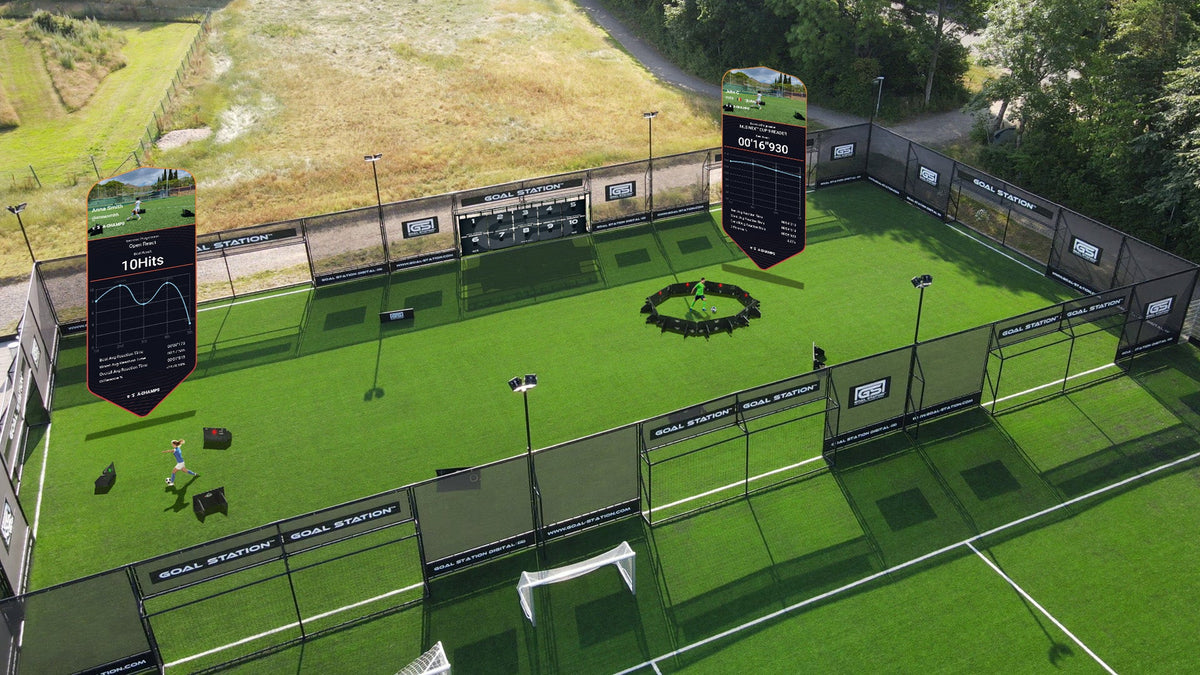
Most football facilities are designed to host sessions. Far fewer are designed to make the most of every minute on the pitch—maximising how many players are active, how often they’re involved, and how much value each hour actually produces. The gap isn’t in the facility itself. It’s in how it’s run.
By David Findlay, CGO at Goal Station.
Quick answer: A Football Training Operating System is a structured way of running sessions that increases the number of players involved, improves the quality and frequency of actions, and introduces clear measurement. Facilities using this approach tend to keep players longer, justify higher pricing, and generate more value per hour on the pitch than traditional setups.
Key point: Field ROI isn’t limited by pitch size or pricing alone. The real ceiling comes from how effectively each hour of use is turned into meaningful training.
- What is a Football Training Operating System?
- The old model: low density, low leverage
- Field ROI and revenue per field hour
- The system that determines ROI
- The new model: high-throughput environments
- Training the way the game is played
- From coach to operator
- Infrastructure behind the system
- Competitive advantage: data + density
- The future of football facilities
- Book a Facility Design Session
- FAQ

What Is a Football Training Operating System?
A Football Training Operating System is a structured approach to delivering training at scale. It focuses on increasing how many players are actively involved, raising the number of meaningful repetitions, and introducing objective ways to measure progress—all while improving revenue per field hour.
The shift is straightforward but important. Traditional facilities sell access to space. Modern facilities sell training capacity and visible progress.
This isn’t about adding more equipment or making cosmetic upgrades. It’s about designing sessions and environments so that every block of time produces consistent, high-quality work.
The Old Model: Low Density, Limited Upside
- One coach running the session
- Only a couple of players active at any time
- Frequent waiting in lines
- Drills that don’t connect to game situations
- No clear way to track progress
Even when delivered well, this kind of session often results in just 200–300 meaningful touches per hour.
From a business perspective, growth is tied directly to time. More sessions mean more revenue—but capacity doesn’t really change.
Field ROI: What Actually Drives It
Most operators recognise Field ROI as a key metric. Fewer look closely at what influences it.
- How many athletes are active at once
- How often they perform meaningful actions
- The value players feel they’re getting
- How long they stay in the programme
Raising prices has limits. Expanding facilities requires capital. Adding more sessions can make operations more complex without improving results. These changes help at the margins, but they don’t fundamentally shift performance.
The real constraint sits inside each session.

The System Behind the Results
Two facilities can charge the same prices, run similar schedules, and use identical pitches—and still end up with very different outcomes. One grows steadily, the other stalls.
The difference comes down to how each session is structured and delivered.
Goal Station is built to act as that underlying system.
It brings together facility layout, session design, and performance tracking into a single approach. Instead of treating these as separate decisions, it aligns them around one goal: getting more high-quality work out of every minute on the pitch.
This has a direct impact beyond training itself.
Facilities without this kind of structure tend to focus on filling time slots. They can stay busy, but struggle to increase the value of each session. Pricing becomes sensitive, retention varies, and growth relies heavily on new sign-ups.
Facilities that adopt a structured system focus on output. Sessions are consistent, repeatable, and measurable. That consistency builds retention, supports higher pricing, and creates steady demand over time.
This is where Field ROI starts to diverge.
In one case, revenue grows in line with bookings. In the other, it builds over time because each session delivers more value and encourages repeat participation.
The difference isn’t the facility—it’s how it’s used.
If you want to explore how this approach could work in your setup, you can contact Goal Station.
The New Model: Higher Throughput, Better Output
- More players active at the same time
- Higher repetition rates
- Built-in decision-making under pressure
- Clear performance tracking
Instead of just a few players involved, structured environments can engage eight or more athletes simultaneously, often reaching 1,000+ meaningful actions per hour.
It’s not just coaching—it’s capacity design.
Training That Reflects the Game
Technical
Executing core skills consistently.
Cognitive
Making decisions under pressure.
Physical
Reacting quickly and moving efficiently.
The most effective environments combine all three, rather than separating them.
From Coaching Time to Operating a System
- Manual coaching models tend to cap income
- Structured environments create room to scale
The shift is subtle but important: from selling time to delivering outcomes.
What Supports the System
- Clear progression pathways
- Consistent benchmarking
- Player profiling
- Repeatable session formats
- Performance reporting
This is what allows quality to stay consistent as capacity grows.
Where the Advantage Comes From
When high repetition, decision-making, and measurement come together, development becomes visible.
That visibility builds trust. And trust drives both retention and pricing.

Where Facilities Are Heading
- Greater player throughput
- Standardised performance benchmarks
- Subscription-based models
- More integrated training environments
Facilities that move in this direction are likely to lead their markets.
See how your facility could increase output, improve Field ROI, and deliver more consistent results.
Book a Facility Design Session
From space to structure. From sessions to results.
FAQ
What is a Football Training Operating System?
It’s a structured way of running sessions that increases player involvement, improves repetition quality, and introduces measurable progress.
How does it improve revenue?
By increasing utilisation, improving retention, and raising the value of each session.
What is Field ROI?
It’s the value—both financial and developmental—generated per hour of pitch use.