
How to Build a Football Facility for Performance and ROI
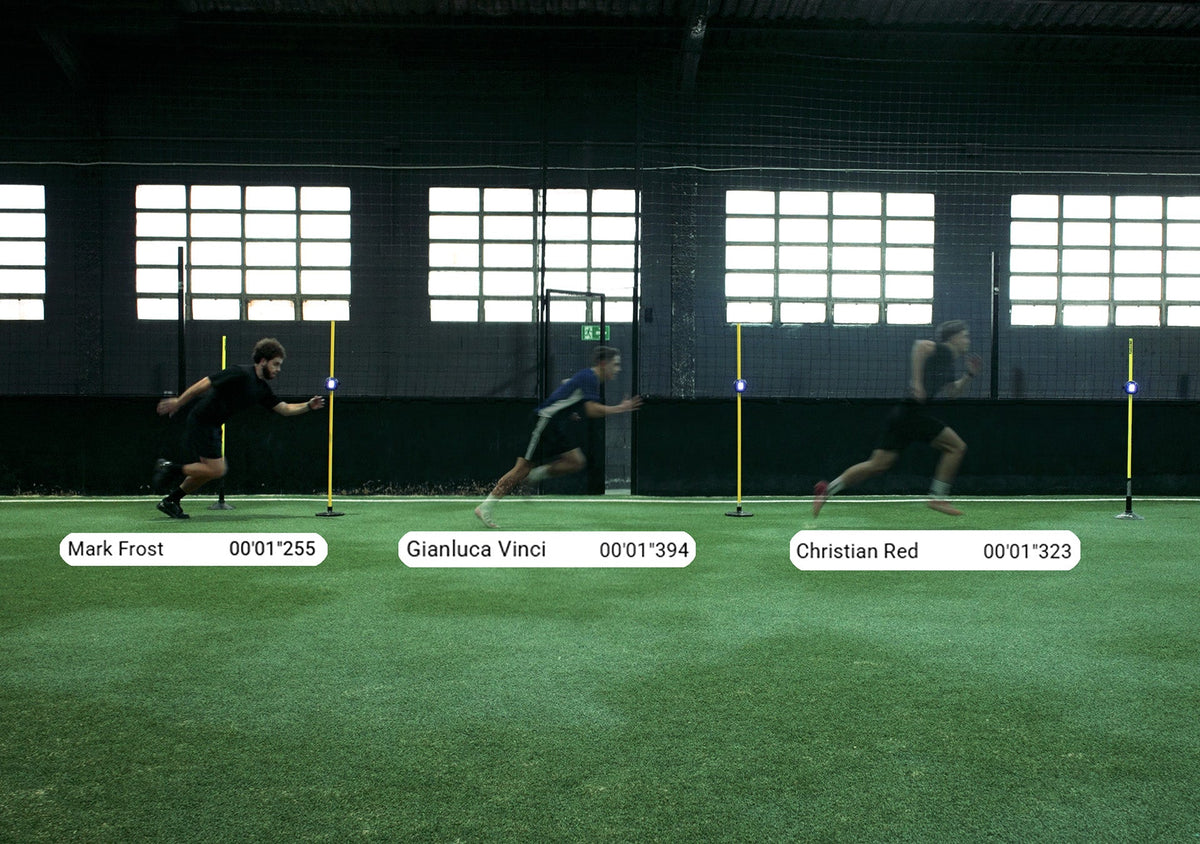
Plenty of indoor soccer facilities get built. Far fewer are designed in a way that makes training output measurable from day one.
By David Findlay, CGO at Goal Station.
Quick Answer: Building an indoor soccer facility can cost anywhere from $380,000 to $10 million, depending on the size of the project, the construction method, and the level of finish. But the biggest decisions are not made when the doors open. They are made much earlier, when you decide on field count, layout, ceiling clearance, climate control, and the infrastructure that will support training and measurement over time.
Definition: Building an indoor soccer facility means designing and constructing a covered football environment that can operate year-round. Most facilities need between 20,000 and 50,000 square feet of clear-span space, at least 20 feet of ceiling clearance, and a playing surface roughly 140 to 210 feet long, depending on the format. Construction costs can start around $19 per square foot for a prefabricated steel shell and rise to $250 per square foot or more for a fully finished facility.
Those numbers describe the shell. They do not explain whether the finished building will support strong long-term returns. In many cases, the revenue ceiling is set during construction, before a single booking is taken.
Key point: The layout choices made during construction shape the commercial ceiling of the facility for years to come. Field count, ceiling height, and environmental control are not small operational tweaks. Once they are built in, they are difficult and expensive to change.

The Capital Range Tells Only Part of the Story
The cost of building an indoor soccer facility varies widely. A prefabricated steel structure covering 20,000 square feet may cost roughly $380,000 to $560,000 for the shell alone at $19 to $28 per square foot, based on figures published by Allied Steel Buildings. Foundation work adds another $3.85 to $7 per square foot. Site preparation can range from $100,000 to $1 million depending on location and ground conditions. A regulation playing surface may add another $100,000 to $260,000 before amenities are even considered.
More traditional construction using concrete block or steel frame typically runs between $100 and $200 per square foot. For a 50,000 square foot facility, that can put the total project cost in the $7.5 million to $12.5 million range. In higher-cost markets, premium builds with spectator seating and more extensive infrastructure can push much higher, sometimes approaching $20 million, in line with broader estimates cited by BusinessDojo.
What those figures do not tell you is whether the facility will perform well commercially once it is open. That depends less on the headline build cost and more on the decisions made before opening day.
Decision 1: The Training System and Measurement Layer
Adding technology to a facility does not automatically create a strong training environment. It only creates the possibility of one. What matters is whether the infrastructure is paired with a system that turns captured information into repeatable, useful training output.
This is where many facilities fall short. They install equipment or tracking tools, but there is no clear method for using that data within daily session delivery. The result is a venue with hardware, but no real operating advantage.
Goal Station is built to address that gap. It works as a Training Operating System rather than just a hardware layer. Session structure, benchmarking, and methodology sit together inside one operating model that shapes how the facility is used each day.
That changes the economics of the space. In a standard rental model, the operator is selling field access. In a structured training environment, the operator is selling training capacity and measurable output.
That distinction matters during the build. Ceiling height, cable routing, surface layout, mounting positions, rebound angles, and circulation around the field are not neutral details. They influence repetition density, coaching flow, and the quality of technical work under pressure.
If those conditions are not designed properly during construction, friction gets built into the facility from the start. Once that happens, the only way to remove it is through costly structural changes.
The commercial effect is clear. Facilities with a defined training system can move more players through each field-hour while keeping sessions consistent. That supports stronger revenue per field-hour and makes it easier to show measurable player development.
That also changes the market position of the venue. Instead of selling generic rental time, the operator is offering structured outcomes. Over time, that affects retention, pricing, and how the facility is perceived in its category.
The facilities that hold their value are not simply covered pitches with better branding. They are environments built around a clear operating model for football development.
For anyone planning a new build, the implication is straightforward. If the aim is long-term Field ROI and measurable training output, the training system and the measurement environment need to be considered during design, not added after opening. Contact Goal Station to discuss your facility plan.
Decision 2: Construction Method and Structural Form
Most indoor soccer facilities are built using one of three approaches: prefabricated steel, traditional block-and-frame construction, or tensioned fabric. Each option has a different cost profile, thermal performance level, and long-term maintenance burden.
Prefabricated steel is often the most efficient way to create a large, column-free span at a relatively low structural cost per square foot. Clear-span layouts of up to 300 feet are possible. That matters because it removes interior obstructions and gives operators more flexibility in how they configure the playing area over time.
Tensioned fabric structures can reduce upfront capital costs and shorten build timelines. The trade-off is usually thermal performance. When insulation is underspecified, that decision shows up later in operating costs through higher heating and cooling bills. What looks cheaper during construction can become a permanent drag on margins.
Traditional construction usually costs more at the start, often in the $150 to $250 per square foot range, but it can offer better durability, stronger environmental control, and easier integration of specialist mechanical systems over the life of the building.
Decision 3: Field Count and Throughput
This is one of the most important commercial decisions in the entire build. A single full-size field creates one booking opportunity per hour. Multiple smaller fields create several at once.
Revenue per field-hour is one of the clearest operating metrics for an indoor facility. A well-run venue often targets something in the range of $140 to $160 RevPFH across a 12- to 14-hour operating day. A single large field gives you one revenue event per time block. Three smaller five-a-side fields can give you three, which changes the economics quickly over the course of a week, as reflected in revenue models described by Sheets Market.
A 50-foot by 80-foot five-a-side pitch with turf, boards, netting, and goals may cost roughly $110,000 to $140,000 to install. Three such fields may fit inside the footprint that would otherwise be used for one regulation-size surface. In some cases, that means higher hourly billing capacity without a proportional increase in total footprint.
Facilities usually need around 40 to 60 booked hours per field each week to reach break-even, often at 60 to 80 per cent occupancy. Smaller-sided layouts can reach that threshold more quickly because peak demand can be spread across simultaneous sessions rather than stacked back-to-back on one field.
Decision 4: Field Dimensions and Ceiling Clearance
The US Indoor Soccer Association lists a standard playing surface of 180 feet by 75 feet, within an allowed range of 140 to 210 feet in length and 60 to 90 feet in width. Minimum ceiling clearance for turf-based indoor football is generally 20 feet.
These numbers are not minor technical details. They shape how the game is played inside the building. A facility built with insufficient vertical clearance affects everything from goalkeeper distribution to aerial play and ball movement under pressure. Once the roofline is wrong, there is no simple operational fix.
Building to the bare minimum may reduce cost, but it also narrows the performance potential of the environment. If the venue is intended to support development, ceiling height should be treated as part of the training architecture from the start.
Decision 5: Playing Surface and Sub-Base
High-quality indoor artificial turf generally costs between $5 and $10 per square foot. On a 16,200 square foot playing area, that can mean $80,000 to $160,000 in turf material alone. Shock pads often add another $1 to $3 per square foot, while sub-base preparation, drainage, grading, and crushed stone base layers add another $2 to $4 per square foot.
What often gets overlooked is the sub-base. That is where many long-term problems begin. If drainage is poor or the base is underspecified, moisture builds up, turf performance becomes less consistent, and maintenance demands rise. Over time, that affects ball roll, footing, and the reliability of the training environment.
A cheaper sub-base can save money at the start, but the difference is often recovered quickly through added maintenance and reduced surface consistency. The cost saving is temporary. The performance loss lasts much longer.

Decision 6: Environmental Control and HVAC
HVAC should not be treated as a comfort add-on. It affects the quality of the training environment every day. Temperature and humidity changes influence how the ball behaves, how players feel, and how sessions run across long operating windows.
Facilities with better wall insulation and more thoughtful environmental design usually reduce heating and cooling costs over time. The temptation to cut insulation costs during construction often leads to higher monthly utility bills for years afterward.
The HVAC system should be designed for peak use, not average use. In a facility with multiple fields and back-to-back bookings, thermal recovery between sessions matters. If the system cannot keep up, that becomes an operating issue that cannot be solved easily after handover.
Decision 7: Measurement Infrastructure and Capture Cost
This is one of the most common blind spots in new builds. If measurement infrastructure is not planned during design, it often becomes far more expensive to add later.
Once a building is complete, retrofitting cable runs, power access, mounting points, or managed connectivity for tracking and monitoring systems can be disruptive and expensive. That is the hidden capture cost of deferring infrastructure planning.
At a minimum, a facility designed for structured training should include perimeter power access, consistent ceiling mounting locations, and managed network coverage across the playing zones. The marginal cost of including these during construction is usually modest compared with the cost of retrofitting them later.
That does not mean every system needs to be installed on day one. In many cases, the better approach is to prepare the environment for future systems without overspending at launch. Build the conditions that make later upgrades easy, then add measurement layers as session volume and programme maturity justify them.
Decision 8: Revenue Architecture and Scheduling
The layout of the facility sets the upper limit of throughput. The operating model determines how much of that capacity turns into actual revenue.
In most markets, indoor soccer demand clusters heavily in the evening, especially between 18:00 and 22:00. Daytime demand tends to be weaker if the venue relies only on casual rental. Facilities that add school bookings, academies, coached sessions, and structured daytime programmes are better able to spread revenue across the full day.
That is not something to figure out after opening. It should be built into the operating plan from the beginning.
Most facilities aim for average occupancy in the 60 to 70 per cent range. Venues that combine afternoon youth programmes, midday coached sessions, and evening adult leagues usually reach that point more reliably than rental-only models. League fees in the $1,200 to $1,500 range per team per season add predictability, while coached sessions priced per player can raise yield beyond standard rental income. Tournament weekends can also generate significantly more than a normal rental day, in line with patterns described by WSB Sport and BusinessDojo.
Each of those revenue lines depends on scheduling and programme design that are easiest to establish before launch. They are much harder to bolt on later once the calendar and customer expectations are already set.

Building an Indoor Soccer Facility as an Operating Environment
When most people talk about building an indoor soccer facility, they focus on the construction process. The more important conversation is about how the facility will perform once it is open.
A strong indoor facility is not just a building with a field inside it. It is an operating environment. The physical design affects training quality. The measurement infrastructure affects what can be captured and defended. The scheduling model affects how often the space produces value.
Those variables are set early, and they are expensive to change later.
The facilities that go on to achieve strong margins usually make these choices deliberately. Revenue architecture and measurement infrastructure are treated with the same seriousness as the sub-base, the shell, and the roofline. They are not left as afterthoughts.
A well-run two-field facility in a suburban market can exceed $1 million in annual revenue, but that outcome is not created by the building alone. It comes from the full set of design and operating decisions made before the facility opens.
FAQ: Building an Indoor Soccer Facility
How much does it cost to build an indoor soccer facility?
Costs typically range from about $380,000 to $10 million, depending on the construction method, facility size, location, and overall finish. Simpler prefabricated buildings sit at the lower end, while full-service facilities with more infrastructure sit much higher.
What size should an indoor soccer facility be?
Most projects need between 20,000 and 50,000 square feet of clear-span space. The right size depends on the playing format, the number of fields, and the support areas included in the plan.
What is the minimum ceiling height for an indoor soccer facility?
A minimum of around 20 feet is commonly recommended. Anything lower can reduce the quality of play and limit the usefulness of the facility for more advanced training.
Is it better to build one large field or multiple small fields?
Multiple smaller fields often create more revenue flexibility because they allow simultaneous bookings and a wider range of programming options.
How profitable is an indoor soccer facility?
A well-run facility can exceed $1 million in annual revenue, but profitability depends on utilisation, pricing, operating costs, and how effectively the business layers leagues, coaching, and other recurring programmes on top of basic rentals.
What matters most for indoor soccer facility ROI?
The biggest factors include field count, layout, ceiling height, climate control, surface quality, measurement infrastructure, and the overall scheduling model.
Do you need measurement or tracking systems in an indoor facility?
They are not essential for basic operation, but they can be important if the goal is to deliver structured training and measurable development. The key is to plan for them during construction so upgrades are easier later.
How long does it take to build an indoor soccer facility?
Most projects take between 4 and 12 months, depending on the build method, site preparation, and overall complexity. Prefabricated structures are usually faster than traditional builds.
What drives long-term success for an indoor soccer facility?
Long-term success usually comes down to decisions made before construction begins: the right layout, the right operating model, and a design that supports both training quality and commercial performance over time.