
Academy Football Rebounders Do Not Build Players. Systems Do.
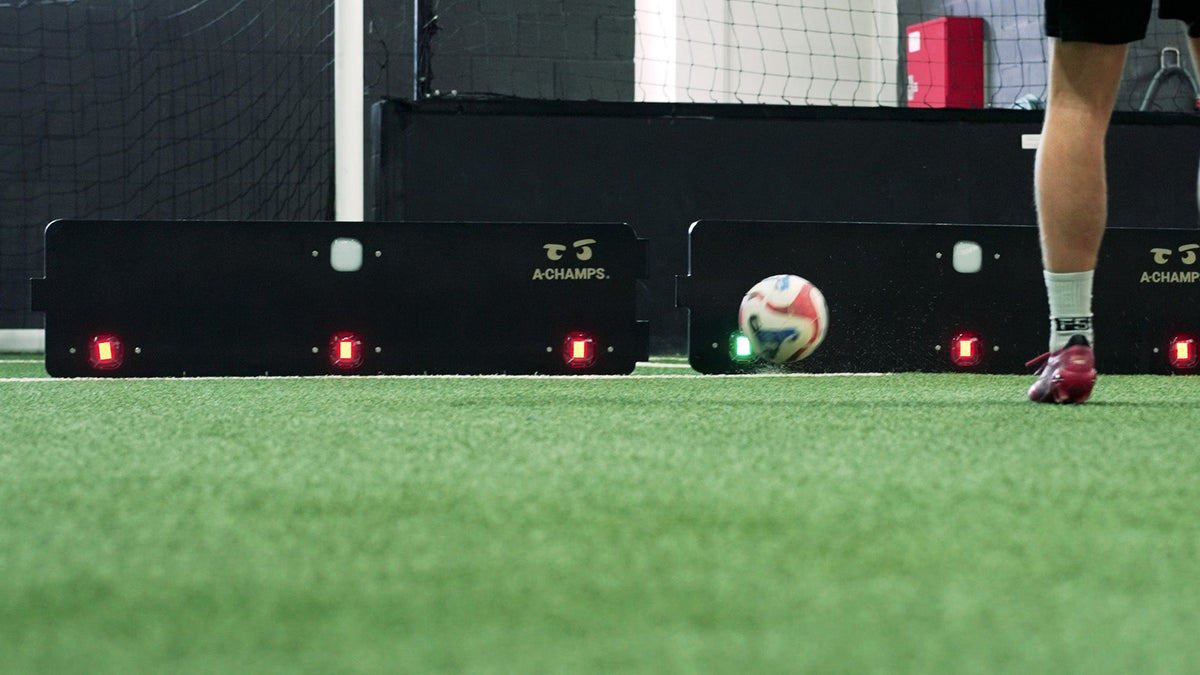
Most academy directors can name several rebounder models without hesitation. Far fewer can answer a more important question: what actually makes a rebounder session useful? In most clubs, the problem is not the frame, the net, or the return angle. The problem is that nobody has built a system to control the quality of the repetition, the cognitive demand of the drill, or the link between that session and the player’s long-term development.
By David Findlay, CGO at Goal Station.
Quick Answer: A rebounder only helps player development when it sits inside a structured session model that defines contact type, return pattern, cognitive task, set volume, and progression standard. Without that structure, rebounder work creates activity but not much signal. A player can have 200 contacts in a session and still make very little real progress if nobody is measuring whether those contacts were executed correctly, challenged properly, or connected to the next stage of development.
Definition: An academy football rebounder is a training tool that returns the ball to the player so technical actions can be repeated without a second player serving. That can be useful, but the rebounder itself is not the development system. It only returns the ball. It does not define the protocol, measure contact quality, or tell a director whether the session moved the player forward. Category overviews such as the football rebounder range at Academy Sports show how broad the equipment market is, but that is only the starting point. The harder question is whether the session built around the rebounder is actually producing development.
That is the real bottleneck in this category.
Most academies do not have a rebounder problem. They have a systems problem.
The hardware sends the ball back. It does not decide what the player should do with that return, how difficulty should progress, or whether the repetition was good enough to count. That is the job of a Training Operating System.
Goal Station exists to govern that layer. It turns repeated contact into measurable development by giving coaches and directors a way to structure the station, standardise quality, reduce guesswork, and connect the work on the pitch to the player’s development profile.
Key point: A rebounder without a Training Operating System is just a ball return. Development only starts when each repetition is governed, measured, and connected to player progression.
This is why so many rebounder sessions look productive from the outside and still fail to produce consistent improvement. Coaches log that the station ran. Players get a high number of touches. But nobody captures contact quality, decision quality, correction rate, or whether the player actually improved over the block.

1. Session structure matters more than the rebounder itself
The first mistake most academies make is treating the rebounder as the main variable. It is not. Session design is the main variable.
If the player is told only to pass, receive, and repeat, the station usually becomes a rhythm exercise. Rhythm has some value in early phases, but it does not tell you much about development unless the contact pattern is defined clearly and the execution standard is monitored.
A good rebounder can protect consistency of return. That helps. But even the best unit only protects the ball path. It does not measure whether the player executed the required contact pattern, used the correct surface, or responded to the right cue.
The operating layer sits above the hardware.
That is why the first question should never be, “Which rebounder should we buy?” The first question should be, “What exactly do we want this station to train, and how will we know if it worked?”
2. Return angle only matters when the decision is defined
Coaches often talk about fixed-angle versus adjustable-angle rebounders as if that alone determines session quality. It does not. Angle variation only becomes useful when the player has a defined task attached to each return.
If the ball comes back at a different angle but the player has no instruction beyond controlling it and passing again, the variation may add movement without adding much learning.
If the angle changes and the player must recognise a trigger, scan early, choose a surface, or redirect into a target zone, the same piece of equipment suddenly becomes much more valuable. Products such as the Munin Sports M-Station Academy reflect this demand for configurable returns, but adjustable hardware only matters when the session tells the player what problem to solve off each return.
Variation creates developmental value only when a system defines the decision attached to the return.
This is where many rebounder sessions fail. They add hardware variation without adding decision structure.
3. Most procurement mistakes begin before the purchase
Clubs often think they made a rebounder mistake because the unit moves too much, degrades quickly, or does not suit the age group. Sometimes that is true. But the bigger mistake usually happened earlier.
Most procurement errors start when clubs buy equipment before they define the session logic and tracking framework that will govern it.
If you do not know the contact pattern, the intended cognitive demand, the age-group use case, or the coaching standard for the station, then the hardware decision is mostly guesswork.
This is where many academies waste money. They compare units, buy at volume, and only later realise that coaches are using them in completely different ways from squad to squad.
That turns what should be a training standard into equipment time.
You do not need perfect equipment first. You need a clear operating standard first.

4. Goalkeeper rebounder work breaks down even faster without structure
Goalkeeper stations expose weak rebounder methodology quickly because the returns are more variable, the actions are more reactive, and the transfer to match situations is easier to overstate.
A keeper can get a lot of action from a rebounder. That does not mean the work is well designed. If the return is random, the footwork is unplanned, and the save action is disconnected from realistic cues, the station becomes busy without being especially useful.
This is where unsupported rebounder work breaks fastest. High-variance returns without a structured protocol create activity, not goalkeeper-specific adaptation.
The keeper station needs the same discipline as any outfield station. What is the trigger? What movement comes before the contact? What correction counts? What progression comes next? Without that, the rebounder adds motion but not much learning. Specialist suppliers such as Keeper Goals show that the market recognises goalkeeper-specific use cases, but the session still succeeds or fails on the strength of the protocol.
5. Data capture fails when the burden is too high
Many clubs know they should track more from rebounder stations, but the moment they try, the reporting becomes unrealistic. Asking a coach to record every correction, every contact type, and every cognitive cue across multiple stations in real time is not practical.
When the burden is too high, one of three things happens. The coach skips the logging, fills it in roughly afterwards, or records something vague enough to be useless.
That is why the right question is not, “How much can we track?” It is, “What is the minimum amount of information we need to capture to make a better coaching decision?”
Goal Station solves this through structured session cards and minimum viable annotation. Instead of forcing coaches to write a full report, it focuses them on the small number of variables that actually matter for progression.
For a rebounder station, those often include:
- the contact type or pattern assigned
- whether the player completed the prescribed set volume properly
- how often coach correction was needed
- which cognitive instruction was applied
That is the difference between honest session data and paperwork that nobody trusts.
6. Good systems protect data quality by removing weak metrics
A lot of rebounder reporting is built around low-value metrics because they are easy to collect. Total touches. Session duration. Equipment usage. General effort scores. Those numbers can make a report look full while telling you almost nothing useful.
A Training Operating System protects data honesty by removing low-value fields and standardising only the signals that feed progression decisions.
If the metric does not help you decide whether to progress, repeat, regress, or redesign the station, it should probably not be a core reporting field.
Touch count on its own is not enough. A long station is not automatically a good station. Equipment used for 20 minutes tells you nothing if the repetition pattern broke down after minute six.
When directors clean up the reporting layer, coaches usually complete it more reliably and the quality of the insight improves.
7. A rebounder station only becomes useful when pressure is built in properly
This is where the conversation needs to move beyond generic phase labels.
A rebounder station becomes developmentally relevant when it progresses through three layers:
- Technical execution where the player learns the surface, timing, body shape, and contact mechanics
- Cognitive execution where the player must recognise a cue, scan, choose, or redirect based on a rule
- Pressure progression where the player performs the action under tighter time, movement, sequencing, or decision stress
That is the progression model most clubs miss.
They stop at repetition.
But repetition on its own is not the goal. Useful repetition is the goal. The station should move from isolated contact to integrated decision-making under pressure. If that progression is missing, the rebounder stays stuck as a warm-up tool or an unsupervised technical station.
This is exactly where Goal Station changes the conversation. It gives clubs a way to design station progressions that move from execution to decision to pressure instead of logging all rebounder work as if it were the same.

Goal Station: The Operating System That Makes Rebounder Work Measurable
Most academies do not have a rebounder usage problem. They have an operating system problem.
The ball comes back. The coach runs the station. The session gets logged. But nobody can say which contact patterns were executed, which cognitive demands were applied, or whether the player progressed.
That is not a rebounder issue. It is a systems failure.
Goal Station gives academies the missing layer between the equipment on the pitch and the decisions made by directors, technical leads, and coaches. It governs session protocols, standardises quality expectations, reduces annotation burden, and links station work to player progression.
More specifically, it helps academies:
- govern session protocols so rebounder stations are run to a clear standard rather than improvised
- standardise session quality across age groups, coaches, and sites
- reduce coach admin burden through simple, high-signal session capture
- connect station work to player progression so repeated contacts can be evaluated against development goals
- turn contact volume into usable development data rather than activity metrics
The rebounder is the station. Goal Station is the standard.
A rebounder gives you repetition. Goal Station tells you whether that repetition counts.
If your academy cannot show which rebounder sessions produce measurable technical progression, you are not running a development system. You are running equipment time.
Book a Goal Station Design Session and build rebounder work into a measurable training standard.
Book your session with Goal Station
Frequently Asked Questions
What is an academy football rebounder?
An academy football rebounder is a training tool that returns the ball to the player so technical actions can be repeated without a second server. Its value depends less on the unit itself and more on the system governing how each repetition is used, measured, and progressed.
How do you make rebounder training actually improve players?
Rebounder work improves players when the station has a clear contact pattern, defined coaching purpose, cognitive demand, progression standard, and a way to capture whether the work was completed well enough to count. Without that structure, sessions often produce activity more than development.
What should clubs measure during rebounder sessions?
Clubs should focus on a small number of useful signals such as contact type, completion rate against the prescribed protocol, correction frequency, and the cognitive task attached to the repetition. Those measures are more useful than raw touch counts on their own.
Are expensive rebounders better for academy development?
Not necessarily. A better rebounder can improve durability and consistency of return, but it does not solve poor session design. Development quality depends more on the training system than on the price of the hardware.
Can rebounders be used for goalkeeper training?
Yes, but only when the session is structured properly. Goalkeeper rebounder work needs a defined trigger, movement pattern, and progression model. Without that, the station can become active without being especially relevant to goalkeeper development.